Two little noticed paragraphs in North Carolina's new state budget could end Medicaid coverage for children's dental surgeries performed at ambulatory surgical centers starting July 1, 2027. State officials confirm that nearly three quarters of those Medicaid claims are for pediatric patients, many of them preschool age children who cannot sit still for office treatment and need sedation to be treated safely. As of July 2026 no one, including the state's own Medicaid dental director, can say for certain what the language was meant to do.
The provision surfaced not through a public hearing or a committee debate but inside dense budget text that oral health advocates are now scrambling to interpret. North Carolina Health News first reported the confusion on July 17, 2026, and the story matters well beyond one state, because it shows how quietly a benefit that protects the youngest and most vulnerable dental patients can be put at risk.
What exactly do the two budget paragraphs say?
The two paragraphs sit on page 265 of the budget and roll back modifications the state made to its Medicaid program in 2023. According to North Carolina Health News, Section 9E.3.(a) says the Department of Health and Human Services "shall not be required to maintain, after June 30, 2027, any modifications to the Medicaid program required by this Subpart," and Section 9E.3.(b) applies the same sunset to modifications required by Section 15 of Session Law 2023-129. The budget was approved on July 2, 2026, and signed into law on July 7, 2026.
The 2023 modifications being sunset are the ones that set Medicaid reimbursement for dental procedures done in ambulatory surgical centers. Three kinds of claims are tied to that language: anesthesia delivered by professionals at the surgical center, the treatment itself performed by a pediatric dentist or oral surgeon, and the pre operative and post operative services and equipment around the procedure.
Key facts and figures
- Nearly 75 percent of Medicaid claims from ambulatory surgical centers for dental care are for pediatric patients, according to Mark Casey, dental director for Medicaid at the North Carolina Department of Health and Human Services, as reported by North Carolina Health News, July 17, 2026.
- July 1, 2027 is the date the sunset provision takes effect, per the budget text signed into law on July 7, 2026 (North Carolina Health News, 2026).
- North Carolina's Medicaid reimbursement rates for dentists have gone unchanged since 2008, a gap that already drives many dentists to decline Medicaid patients (North Carolina Health News, 2026).
Why does this hit young children hardest?
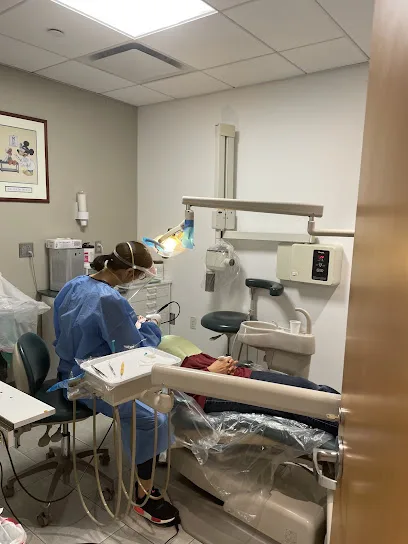
It hits young children hardest because the surgical center setting exists largely for them. Many of the patients are preschool age children with extensive decay who cannot cooperate for treatment in a normal dental chair. For these children, procedures such as multiple extractions, fillings, or even diagnostic X rays are done under sedation or general anesthesia in a controlled surgical environment. Remove Medicaid coverage for that setting and families on Medicaid may have no realistic way to get their child's mouth treated before infection and pain worsen.
This is the same population that pediatric practices treat every day. Families searching for a provider comfortable with very young or anxious children can browse verified options such as Oak Mountain Pediatric Dentistry and other North Carolina area practices like Lembo Montgomery in Mooresville through Smile Listing. Coverage questions like this one determine whether the care those practices provide is affordable for a Medicaid family in the first place.
How worried are oral health advocates?
They are worried enough to go looking for answers, and frustrated that the answers are not there. Crystal Adams, executive director of the North Carolina Oral Health Collaborative, put the core problem plainly.
"The mystery is why this is being sunsetted."
Even the state official responsible for Medicaid dental policy says he is still trying to understand the intent. Mark Casey, the department's Medicaid dental director, told North Carolina Health News that he does not read the provision as an outright ban but agrees the wording is a problem.
"I don't think it bans surgeries, but I would agree that the language is not that helpful."
When the person who administers the benefit cannot say for sure what a budget line means for children a year from now, families and providers are left planning around uncertainty.
What could change on July 1, 2027 compared to today?
The honest answer is that it depends on how the department reads the language, but here is the practical contrast families and practices are weighing.
| Item | Now (through June 30, 2027) | If the sunset takes full effect (from July 1, 2027) |
|---|---|---|
| Medicaid coverage for dental care at ambulatory surgical centers | Covered under the 2023 modifications | Not guaranteed; the department is no longer required to maintain those modifications |
| Who is most affected | Nearly 75 percent of these claims are pediatric | Same young, high need children lose the clearest path to sedation based treatment |
| Claims involved | Anesthesia, treatment, and pre and post operative services | All three tied to the language that is set to sunset |
| Clarity for families and dentists | Rates and coverage defined | Intent unclear; state seeking guidance as of July 2026 |
Is this part of a bigger pattern in Medicaid dental policy?
Yes, and that is what makes it worth watching for families everywhere, not only in North Carolina. The confusion reflects a recurring pattern in which significant policy changes get folded into dense budget language written with little public or committee input, so the practical effect on patients is not debated before the measure becomes law. Longstanding underfunding compounds the risk, since North Carolina's dental Medicaid rates have not moved since 2008 and dentist participation is already thin.
Smile Listing has tracked the wider squeeze on children's dental coverage, including a Harvard analysis warning that Medicaid dental cuts could leave 480,000 children without coverage a year, and the wave of state dental insurance reforms passed in 2026. The North Carolina episode is a reminder that coverage can be narrowed by a single sentence as easily as it is expanded by a headline reform.
What should North Carolina families do now?
Families do not need to change anything today, because coverage runs through June 30, 2027, but there are sensible steps. Parents whose children may need sedation based dental treatment should not delay scheduling while current coverage is in place. It also helps to confirm a child's Medicaid dental benefits directly with the North Carolina Medicaid program and to ask the treating pediatric dentist or oral surgeon whether the planned procedure is billed through an ambulatory surgical center. Advocates are pressing the department for written guidance, so the practical picture may become clearer well before the 2027 date.
Frequently asked questions
Does this budget provision ban children's dental surgeries in North Carolina?
No. The state's Medicaid dental director says he does not read it as a ban. The concern is that after July 1, 2027 the department is no longer required to maintain the 2023 rules that set Medicaid payment for dental care at ambulatory surgical centers, which could put coverage in doubt.
When would any change take effect?
The sunset language applies after June 30, 2027, meaning July 1, 2027. Coverage under the current modifications remains in place until then, according to North Carolina Health News.
Why are surgical centers important for kids' dental care?
Young children with severe decay often cannot be treated safely in a standard dental office and need sedation or general anesthesia in a surgical setting. Nearly three quarters of these Medicaid surgical center dental claims are pediatric, per the state's Medicaid dental director.
Where can I find a dentist experienced with young or anxious children?
Smile Listing lists verified pediatric and family practices with reviews and contact details, including providers who handle sedation cases and treat children on Medicaid where available.
Updated July 2026. Reporting on the budget language is drawn from North Carolina Health News and Becker's Dental Review. This article is general information, not legal or benefits advice; confirm coverage with the North Carolina Medicaid program and your child's dentist.
Primary sources: North Carolina Health News, July 17, 2026, Becker's Dental Review, and the North Carolina Department of Health and Human Services Medicaid dental fee schedules.